Accommodation

We have successfully secured the most competitive accommodation rates at the prestigious Gothia Towers hotel! 

By offering our exclusive rates, we aim to enhance your stay, allowing you to focus on the enriching content of the Congress while enjoying the luxurious amenities and central location offered by Gothia Towers.

Early booking is highly recommended.

For Terms and Conditions, please click here

Hotel Category Room type Rates
Gothia Towers 4* Standard – Single Room 155,00 EUR
Gothia Towers 4* Standard – Double Room 173,00 EUR
Room rates are quoted in Euro, per room, per night, including Breakfast and VAT.

Gothia Towers Hotel 4*

Standard - Single Room

155,00 EUR

Standard - Double Room

173,00 EUR

Room rates are quoted in Euro, per room, per night, including Breakfast and VAT.

The official accommodation partner for EAPD 2024 is the Professional Congress Organizer (CONVIN S.A.). Any queries regarding the accommodation should be addressed only to CONVIN S.A.

Please note that the hotel will not accept any changes, cancellations or payments directly.

For group bookings (5 rooms or more), please contact the Professional Congress Organizer at: delegates-2024@eapdcongress.com

Group reservations are not accepted online as different terms and conditions apply.

You are strongly advised to be alert for unauthorized agents who may contact you directly by email or phone, offering their services.

Gothia Towers Hotel

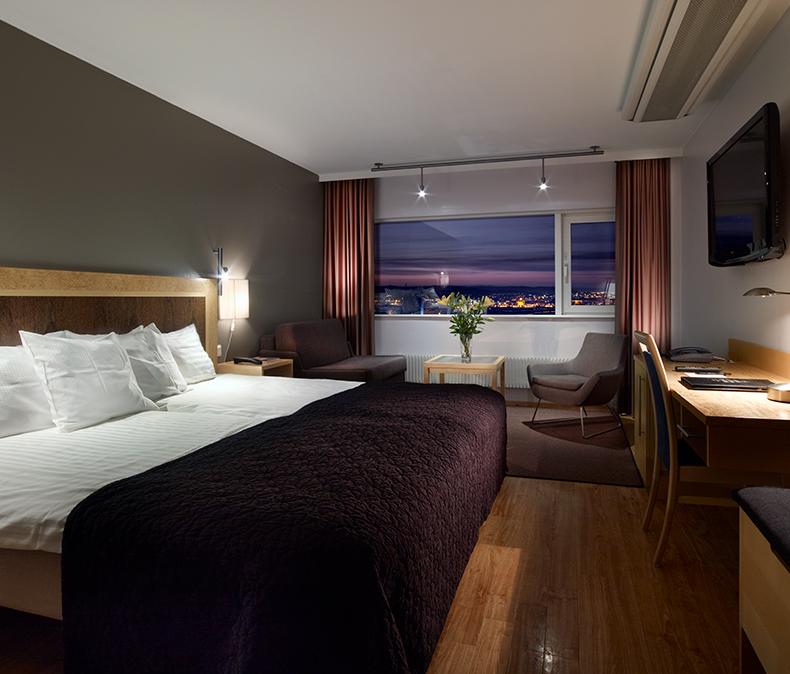
Gothia Towers, at the heart of the event district, houses, in all three of its imposing towers, two top-class hotels offering to visitors from around the world an out-of-the-ordinary hotel experience.

Features 1.200 tastefully decorated rooms, from affordable double rooms to spacious extra-everything suites, most of which with magnificent views of the city. The furnishings are carefully selected and updated, with beautiful textiles and woods that lend a Scandinavian character.

All rooms are non-smoking and Wi-Fi is always included. Visitors have free access to the gym and, as a guest at Gothia Towers, they can also use the spa facilities at the Upper House sister hotel for an additional fee.

Hotel has room amenities include a breakfast buffet, a minibar, a kettle, a wide range of TV channels and everything else a visitor needs to make him / her long to return – time and time again.

Disabled facilities

Gothia Towers has 12 accessible standard rooms of 25 m2 offering extremely comfortable accommodation for wheelchair users. All rooms have a great view of either beautiful Liseberg, bustling Korsvägen and Universeum or Gothenburg’s lively city centre and the Ullevi Arena.

Rooms are furnished with everything that is necessary to ensure an enjoyable stay:

  • Disabled access
  • Grab bar by the toilet
  • Fold-down seat in the shower
  • Automatic door-opener
  • Two single beds (105 cm) that can be moved apart or pushed together as required
  • Standard breakfast buffet
Dr. Jurado-Fasoli

Dr. Jurado-Fasoli is an Assistant Professor in the Department of Physiology at the University of Granada, Spain, and a researcher at the Sport and Health University Research Institute (iMUDS). He holds a PhD in Biomedicine from the University ofGranada and is a Registered Dietitian-Nutritionist. His research focuses on human physiology, nutrition, dietary supplementation, and exercise, particularly in relation to metabolic health and performance. He has authored more than 80 peer-reviewed scientific papers, many in top-quartile journals, and has received several distinctions, including the Best Doctoral Thesis Award (2023–2024) from the Spanish Society of Physiological Sciences. Dr. Jurado-Fasoli has conducted research stays in leading institutions such as Yale University, Leiden University Medical Center, and Chalmers University of Technology, and has active collaborations with international research groups. His work aims to advance precision nutrition strategies for improving health and physical performance.

Prof. Eric Robinson

Eric is a Professor of Psychology & Public Health at the University of Liverpool, UK. His research examines how food policy can be used to improve population diet and reduce obesity. His work has directly informed and evaluated national dietary policy, as well as being recognised by the World Obesity Federation (Outstanding New Faculty Member, 2016) and leading national, European and international scientific societies (2010-2024).

Dr. Mark Hopkins

Dr. Mark Hopkins is an Associate Professor of Nutritional Physiology and an UKRI Future Leaders Fellow within the School of Food Science & Nutrition, University of Leeds, UK. His work aims to link whole-body metabolism and psychological function with human behavior to gain a better understanding of how eating behavior is shaped by our physiology, and how these relationships are altered under differing conditions of energy balance. In particular, he is interested in 1) the relationships between body composition, energy expenditure and appetite control, 2) the role of fat-free mass and resting metabolic rate on the control of appetite, 3) the impact of exercise on appetite control, and 4) the biological and behavioral compensatory mechanisms that resist diet and exercise-induced weight loss.
Mark has published extensively in the areas of human appetite, energy balance and obesity, with >100 peer-reviewed research articles, a Scopus H-index of 35 (Google Scholar = 42), and >3900 Scopus citations (Google Scholar >6600). He has successfully obtained £4.9 million in research funding, including £2.4 million as PI (UKRI Future Leaders Fellowship; Wellcome) and £2.5 million as Co-I (National Institute for Health Research; White Rose University Consortium). He has authored two expert position statements on exercise and appetite control for the British Association of Sport & Exercise Sciences (the professional body for sport and exercise sciences in the UK) and is an author on the recent American College of Sports Medicine’s consensus statement on Physical Activity and Excess Body Weight and Adiposity for Adults. He is the Network Lead for the Association for the Study of Obesity Yorkshire Region, and a steering committee member for the BBSRC ORIC Research Hub, INFORM, and the Movement and Physical Activity Interdisciplinary Research Network at the University of Leeds, UK.